
Zen Tiles - Mahjong Match
BluetilePuzzle
4.82.82K Reviews
- Version
- 2.8.1
- Installs
- 1.00M
- Age Rating
- Everyone
Screenshots
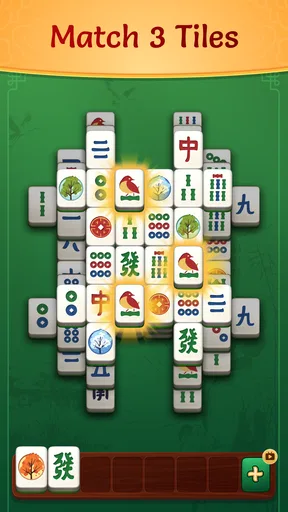
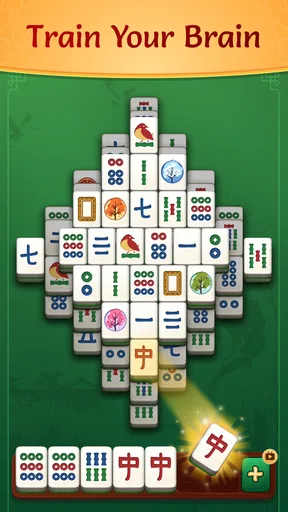
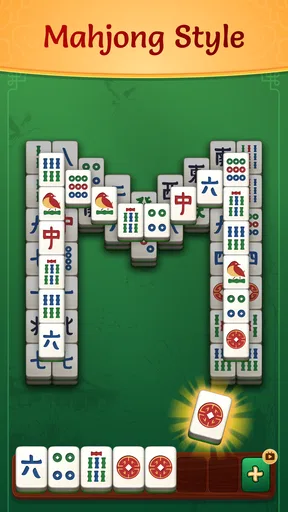
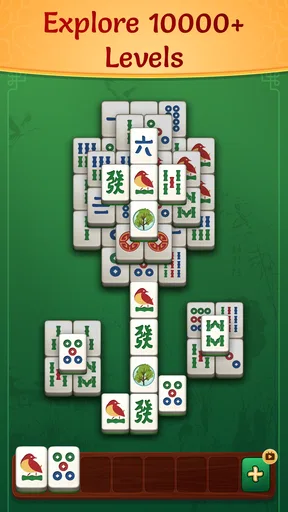
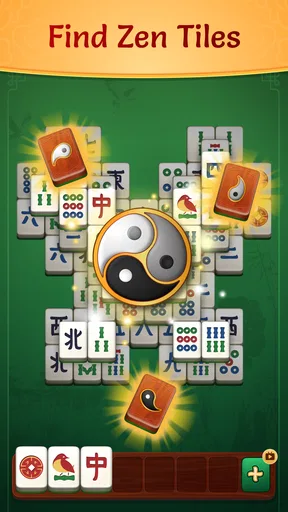
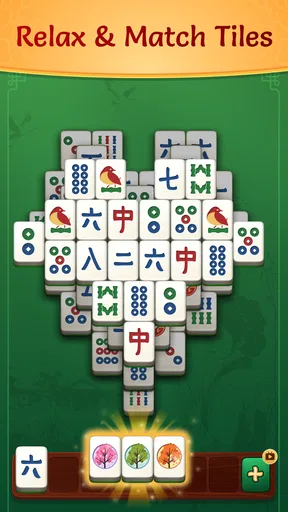
Our Review of Zen Tiles - Mahjong Match
 Analysis by Appyee
I approached Zen Tiles - Mahjong Match expecting a gentle tile-matching game, and that is exactly where it fits best: short, quiet puzzle sessions built around spotting groups of three matching tiles. It is a free puzzle game from Bluetile, rated for Everyone, and it has the kind of simple rule set that takes seconds to understand. The challenge comes from deciding which tiles to remove first, not from learning a complicated control system.
After spending time with it, my main impression is that the game works best as a small daily reset rather than as a deep strategy title. I can open it while waiting for an appointment, play a few boards, and stop without feeling that I have abandoned a long campaign. At the same time, the relaxed presentation should not be mistaken for a completely effortless experience. Once the visible choices become less obvious, careless matches can leave an awkward board that requires more thought than the opening moves suggest.
How the basic tile routine feels in real use
The normal workflow is straightforward. I look across the available tiles, identify three of the same design, and select them to clear them from the board. Every move changes what is visible, so the useful skill is not simply recognizing a match. It is recognizing which match improves the next few choices. A triple that is easy to see may be less valuable than one that uncovers several tiles or prevents a useful piece from becoming buried.
That makes the first moments of a puzzle deceptively important. When I rush through obvious groups, I sometimes remove the most convenient tiles while leaving the board with fewer flexible options. A better habit is to scan the whole layout before tapping. I try to notice repeated designs, partially covered pieces, and areas where one removal could expose several future matches. This takes only a few seconds, but it makes the game feel much more deliberate.
The triple-matching rule also gives the game a pleasant middle ground between a pure memory test and a traditional mahjong solitaire board. I am not only looking for exposed pairs or identical images. I am managing a small collection of possible groups and choosing the order that keeps the board open. That is why the game can feel calming during an easy section and surprisingly absorbing when several similar-looking choices compete for attention.
For an everyday example, I find it suitable for a short break between tasks. I can play without preparing a strategy guide or remembering a story line, and the visual goal is immediately clear. It is also a reasonable choice before bed if I want something less demanding than an action game. However, I would not recommend it to someone who wants a long-form puzzle campaign with elaborate rules, character progression, or a strong narrative reason to keep playing.
The interface style supports that use. The “zen” identity is not just a label in my experience; the appeal comes from the unhurried rhythm of examining the board and making one small decision at a time. Still, calm presentation does not guarantee that every session feels equally smooth. Puzzle difficulty depends heavily on the arrangement in front of me, and a board can become tense when I have too few safe choices left.
Small settings checks that improve the routine
Before settling into regular play, I recommend opening the available settings and checking how the game behaves on your device. I pay particular attention to sound and other presentation controls because a quiet tile game is often used in places where unexpected audio is inconvenient. I also check whether the display feels comfortable at the brightness I normally use. These are simple checks, but they matter more here than they would in a fast game where sound and visual effects are part of the action.
I would not assume that every useful improvement comes from a special option. On mobile, the most effective “setting” is often the way I hold the phone and where I play. A larger screen makes it easier to separate similar tiles, while a smaller display rewards slower scanning and careful tapping. If several pieces look alike, I pause rather than relying on quick swipes or repeated taps. That reduces the chance of selecting the wrong tile simply because I was trying to maintain speed.
Zen Tiles - Mahjong Match is currently listed as version 2.8.1 and supports Android 7.0 or later. That broad compatibility makes it practical for people using an older Android phone, although the experience can still vary with screen size and performance. The game is free to download, with optional in-app purchases ranging from $0.99 to $2.99 per item. I see that as a reason to decide in advance whether I want to spend anything, rather than treating purchases as part of the core puzzle routine.
For a child or family device, the Everyone content rating is reassuring, but I would still let the person using the phone know that optional purchases exist. The game’s basic appeal does not require buying anything, so a simple rule of leaving purchases alone is easy to follow. Adults who dislike any in-app purchase prompts may prefer a paid puzzle with a single upfront cost, even if it offers fewer casual sessions.
One practical habit is to play with notifications and interruptions under control. I do not mean that the game requires a special mode; rather, a board that depends on visual comparison is easier to solve when a message banner is not covering part of the screen. If I am playing during a commute or in a busy room, I also accept that this is not the best environment for careful planning. The game is forgiving as a casual distraction, but focused decisions are easier when I can give the board my full attention.
Faster patterns that do not rely on reckless tapping
Experienced play is less about moving quickly and more about reducing wasted thought. My first useful pattern is to divide the board into zones. I scan one area for immediate triples, then check another for covered or partly revealed groups. This prevents me from repeatedly searching the entire layout after every move. Once I find a promising group, I still inspect the rest of the board before selecting it, because a different triple may open a more valuable path.
A second habit is to prioritize visibility. If one move exposes a tile that could complete several possible groups, I usually value it more than a move that merely removes three already-isolated pieces. This is not an absolute rule. Sometimes a simple triple clears space and avoids congestion. The point is to judge a move by what it creates next, not only by how satisfying it looks immediately.
I also try to remember the location of matching designs rather than tapping as soon as I see one. When two matching tiles are visible and the third is hidden, I keep that possibility in mind while examining the rest of the board. This turns the puzzle into a light planning exercise. It is especially helpful when the artwork contains several designs with related colors or shapes, because visual familiarity can make a near-match feel correct when it is not.
Another non-obvious improvement is to avoid clearing the same region in a fixed order every time. A left-to-right routine feels efficient, but it can make me overlook a better move near the center or edge. I get better results by alternating between a broad scan and a focused inspection of the most open area. That rhythm keeps me from becoming too attached to the first triple I notice.
When the board starts to feel crowded, I slow down instead of trying to recover through speed. I look for moves that reduce the number of blocked or inaccessible tiles and avoid spending a useful match merely because it is visually prominent. If the game offers a recovery or assistance action in the situation I am playing, I treat it as a resource for a genuine dead end rather than an automatic button. I do not want every puzzle decision replaced by prompts or rescue tools; the planning is the part I find rewarding.
These habits make the game more satisfying without turning it into a competitive exercise. There is no need to measure every second or chase a perfect routine. The benefit is that I make fewer impulsive choices and understand why a board became difficult. That distinction matters: a failed puzzle can teach me to preserve flexibility, while a rushed puzzle often teaches me very little.
Where the strategy reaches its limits
The biggest limitation is that the basic rule set can eventually feel familiar. Matching groups of three is easy to learn, and players who want a constant stream of new mechanics may find the experience too narrow. The game’s strength is its accessibility, but accessibility also means it does not provide the layered systems found in more demanding logic games, elaborate mahjong simulators, or puzzle adventures with several interacting objectives.
There is also a difference between relaxing and repetitive. I enjoy the predictable structure when I want a low-pressure session, but I would not use it as my only puzzle game. If I am looking for deduction, wordplay, physics challenges, or a campaign that changes how I think from chapter to chapter, I would choose another category. This is best when I want the mental equivalent of a short walk: familiar, focused, and easy to begin.
Visual similarity can create friction too. When multiple tile designs are close in appearance, the challenge may come from careful recognition rather than from a sophisticated strategic twist. That can be satisfying for some players and tiring for others. People with smaller screens or visual strain should take their time and avoid assuming that a quick glance is enough. The game rewards patience, but it does not remove the practical limits of mobile viewing.
Its free model is another trade-off. Being free makes it easy to try, and the optional items are inexpensive individually, but anyone who strongly prefers a completely purchase-free experience may find even optional offers distracting. Conversely, someone who expects a premium puzzle with every feature unlocked from the start may be happier with a paid alternative. I consider the free entry point a benefit, provided the player is comfortable ignoring extras.
The game is also not ideal for every social situation. It is a personal, screen-focused activity rather than a multiplayer conversation game or a shared tabletop experience. I can recommend it for solo downtime, but not for a group that wants to compete or cooperate directly. Its quiet design suits individual concentration much more than a party setting.
Popularity does suggest that the format has broad appeal: the game has passed a million installs and holds an average rating of 4.8 from around 174 thousand ratings. I read that as evidence that many players enjoy the accessible presentation, not as a guarantee that it will suit everyone. A high average cannot change the central trade-off: the game offers a focused matching loop, and players who need constant novelty may outgrow it.
Who should download it and who should look elsewhere
I would recommend it to someone who likes tile puzzles but wants a softer, more approachable version of the usual mahjong experience. It is a good fit for short sessions, older Android devices that meet the minimum requirement, and players who enjoy improving through better move order rather than learning complicated controls. It can also work well for a person who wants a quiet alternative to scrolling through social feeds.
I would be more cautious recommending it to a player who needs strong progression, competitive rankings, a story, or a large variety of puzzle rules. Traditional mahjong fans looking for the full tile game with opponents and scoring should not confuse this with that experience. Likewise, people who prefer word puzzles or number logic may find the visual matching loop too dependent on recognition and board management.
For parents, the Everyone rating makes the game broadly approachable, but I would still review the purchase behavior on a shared device. For commuters, I would suggest playing when the phone can be held steadily, since crowded surroundings make visual scanning less comfortable. For puzzle enthusiasts, my advice is to treat it as a warm-up or a decompression game rather than expecting it to replace a deeper logic title.
The developer, Bluetile, has kept the central idea easy to understand, which is important because the game’s appeal depends on immediate access. I do not need to study instructions before trying a board. The more advanced value comes from building personal habits: scanning before tapping, protecting future choices, and using the board’s open areas intelligently. Those are modest skills, but they give the simple format more staying power than the first few rounds might suggest.
My verdict after settling into the rhythm
Zen Tiles - Mahjong Match succeeds because it knows what kind of game it is. It is not trying to be a sprawling puzzle adventure. It is a compact triple-tile matching experience with a calm presentation, quick entry, and enough decision-making to make careless play noticeably worse. I like that I can enjoy it for a few minutes without committing to a long session, while still finding room to improve my choices.
The best way to approach it is with a repeatable routine: check the board broadly, identify the moves that preserve visibility, pause before committing to an obvious triple, and keep purchases optional rather than central to the experience. Those habits make the puzzles feel more intentional and reduce the frustration of creating a difficult board through impulsive selections.
My recommendation is therefore positive but specific. Choose this game for calm, bite-sized tile planning, not for deep progression or constant mechanical surprises. If that matches what you want from a mobile puzzle, the free download is an easy experiment, and the Everyone rating makes it broadly accessible. If you need richer strategy, social play, or a completely different kind of mental challenge, another puzzle game will serve you better. For my own phone, I would keep it installed as a reliable short-break game: simple enough to open immediately, but thoughtful enough that I cannot play well on autopilot.
Verdict
Strengths of Zen Tiles - Mahjong Match
- Relaxing gameplay suits short breaks or longer, unhurried sessions.
- Simple matching rules make it easy for beginners to start playing.
- Tile designs are generally clear and easy to distinguish.
- Progressive levels provide a steady sense of achievement.
- Offline play is convenient when no internet connection is available.
Limitations of Zen Tiles - Mahjong Match
- Some levels may feel repetitive after extended play.
- Difficulty can vary noticeably between stages.
- Hints and other assists may be limited during tougher puzzles.
- Frequent ads can interrupt the flow in the free version.
- Players seeking competitive multiplayer may find the experience lacking.
Other Releases by Bluetile
View All

Ball Sort Puz - Color Game
Puzzle4.8

Water Sort Puz - Color Game
Puzzle4.8

Dot Link - Connect the Dots
Puzzle4.8
Similar Picks in This Category
View All
Block Blast!
HungryStudio4.8

Braindom: Brain Games Test
Lahana Game Studio4.6

AMAZE!
CrazyLabs LTD4.6

Sudoku - Classic Sudoku Puzzle
Oakever Games4.7

Art Puzzle - Puzzle Games
Easybrain4.8

Amaze GO!
Oakever Games4.9
Frequently Asked Questions
What is Zen Tiles - Mahjong Match, and how is it played?
Zen Tiles - Mahjong Match is a relaxing tile-matching puzzle game built around familiar mahjong-style mechanics. You usually need to find and match identical, available tiles until the board is cleared. Only tiles that are not blocked by others can be selected, so each move requires attention and planning. The game combines short levels, calming visuals, and progressively more challenging layouts.
Is Zen Tiles - Mahjong Match suitable for beginners?
Yes. Zen Tiles - Mahjong Match is generally easy to understand, even if you have never played a mahjong matching game before. Early levels introduce the basic rules gradually, while later boards add more complicated arrangements that require better observation and decision-making. The relaxed presentation makes it suitable for casual players, although some advanced levels may still require patience or strategic use of available tools.
Can Zen Tiles - Mahjong Match be played offline?
Many of the core tile-matching levels may be playable without a constant internet connection, which makes the game convenient for travel or short breaks. However, features such as advertisements, rewards, progress synchronization, special events, or in-app purchases may require connectivity. Availability can also depend on the version installed and the device platform, so it is best to check the game’s current store description.
Does Zen Tiles - Mahjong Match contain advertisements or in-app purchases?
The game may include advertising and optional in-app purchases, as is common with free-to-download puzzle games. Ads can potentially appear between levels or when you request extra rewards, hints, or other assistance. Purchases may provide additional resources or remove certain limitations. Before downloading, review the store listing and payment settings, especially if children may use the device.
What should I know about performance, privacy, and device compatibility?
Zen Tiles - Mahjong Match is designed as a casual mobile puzzle game and should run smoothly on many modern Android and iOS devices, although performance can vary with older hardware. Check the official store page for supported operating-system versions and storage requirements. You should also review the developer’s privacy policy to understand what information may be collected, including usage, advertising, or diagnostic data.
Play our best games!


